
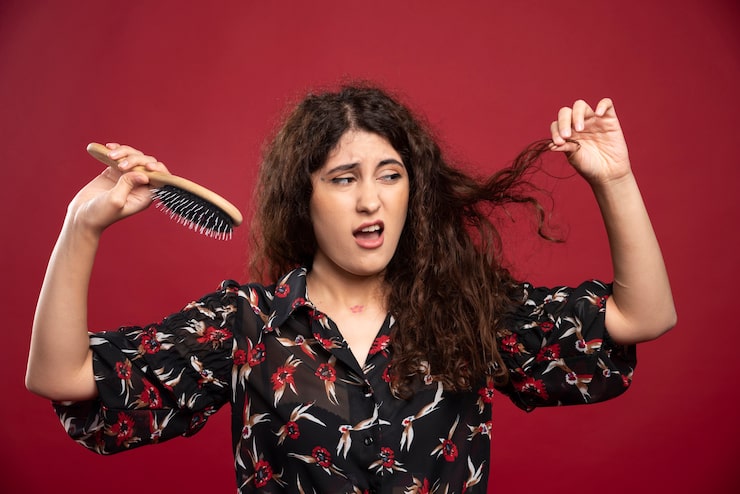
Always a part and parcel of the manner in which we choose to express ourselves in the external world, the significance of hair has come to take on an even more complex form in the last few years. Culminating in far more than mere trends and aesthetics, the importance of hair has come to represent one of the most individual forms of self-expression to date, representing far more than mere moments and emotions in the process. It is in this respect that it differs from clothing, for the mere fact is that clothing can be changed from one day to another.
When one examines the situation a bit further, it becomes quite obvious that a new hairstyle rarely translates to a new look per se. In quite a number of situations, the decision to change hairstyles often borders on what has already started happening inside. Taking into consideration that people tend to want to try new hairstyles that involve a new cut, new look, or even sticking to their natural hair types, all these choices tend to begin at a point of self-introspection. This is because people often tend to be at a different stage in life.
It has long been understood by psychologists and cultural observers that there is an emotional relationship between hair and self-perception. Hair rests in a unique area of both exposure and vulnerability. Hair frames the face, the first point of impression, and hair also carries an underlying yet influential role in the projection of confidence. When people face self-doubt or an imbalance of emotions, they often consider hair the first point of their physical self that they seek to change. Hair represents an emotional expression.
The conversation about hair has thus evolved as a part of the larger discourses about authenticity and identity. In a world where digital imagery and the presentation of self through filters have come to increasingly define reality, a certain countercultural response to an overly groomed ideal is surfacing. In this way, the statement being made with hair is one of quiet independence, the celebration of character through a certain rawness, or lack of polish.
This view has also been explored in the independent analyses of fashion and culture through editorial writing via the WorldFashionNews platform, where hairstyles are analyzed not merely for their aesthetic significance but for their emotional connotations as well in relation to mood, confidence, and storytelling. It would seem that a view of hairstyles from a psychological angle has much to offer.
One of the more potent qualities of hair is its resilience. Although one might easily remove a fashion accessory or change one’s clothing, hair is something to which one must dedicate considerable time. A haircut, a highlights job, might last long enough to see one through an entire decade of one’s life. This is what imbues hair with gravity. Hair is something through which one might trace a life story. As fashion increasingly seeks to blur the lines between self-expression and commentary, hair is consistently one of the most personal means of storytelling. It is imbued with memory and meaning in a way that very few aspects of fashion ever could. In understanding hair as something more than an element of style, it is clear that its purpose is to serve as a reflection of who we are and who we are becoming.
